
Future-proofing your career - a conversation on AI with Saria Joseph Beainy
By: Milie Fiirgaard
We’ve all heard it said - from the “big-brained” billionaires to the lazy gymnasie student who doesn’t want to do their SRP: AI is here, and you can either learn to understand it or be left behind.
But is that really true? Do we all need to pivot our careers? What are the most important skills right now, and how do we as working humans deal with the supposed inevitability of AI?
To try and answer some of these questions, I sat down to talk with someone who has seen the development from the inside of the tech industry and now works with AI every day here in Denmark: Head of Data and AI at Accenture, Saria Joseph Beainy. If you’re particularly interested in this topic, you might have already heard of her - or at least her Instagram @TheCorporateFlamingo, where she has amassed over 100k followers in less than a year talking about AI literacy and self-authorship.
If you wouldn’t mind introducing yourself?
Saria: “I’m Saria, I’m a civil engineer by education. For the last 13 years, I’ve worked in technology and consulting, where we consult on any kind of tech for any industry.”
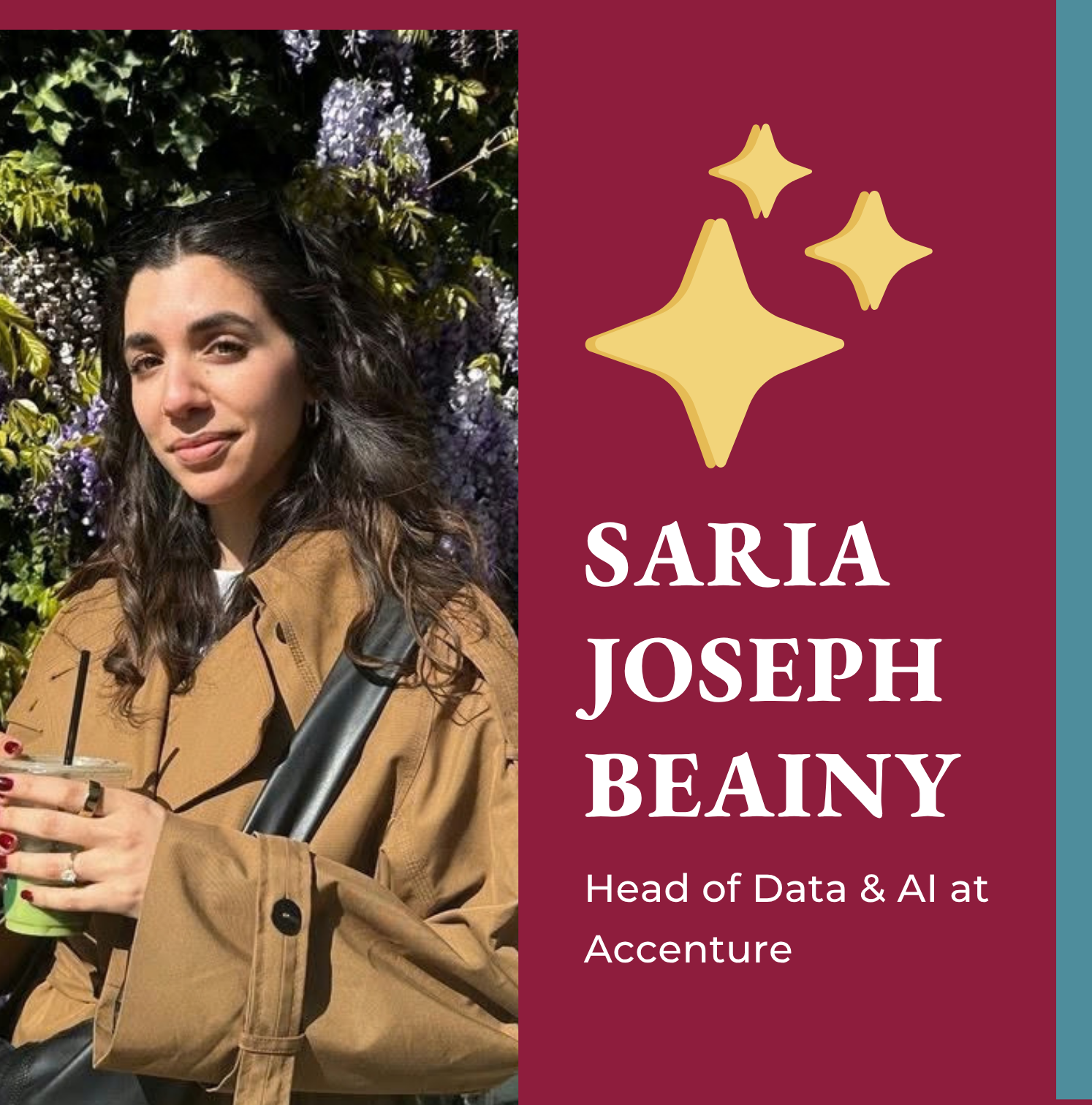
A passionate woman at work and equally passionate and sunny in her private life, Saria Joseph describes herself as a multipotentialite: “I watched a TED Talk a few years ago that used this word, which describes people who have a lot of passions and can’t decide on just one. What drives me is essentially anything that I feel is going to help me grow and learn,” Joseph says.
Growing up in Lebanon, moving to Denmark wasn’t exactly “on her bingo card”, but when a recruiter slid into her LinkedIn DMs, she decided to see what life had to offer. And while being Mediterranean in Scandinavia has its challenges, it also has definite advantages:
Saria: “See, there’s this joke where I’m from: Everyone growing up in Lebanon was first in their class, because that is what your mom says when she talks about you to her friends. We don’t see competition as necessarily bad. It gets you to push yourself and find out what gets you going.
At this point in my life, at 34 years old, I feel that my background has given me an advantage, because it made me resilient. It means I get a lot of the “problem projects”, which is the stuff that no one else wants to do. But without stress, you won’t grow.”
As a kid, Joseph fell deeply in love with learning. While her first love was physics, she was also deeply in love with creativity, winning several writing competitions. The multipotentialite in her was obviously upset when she was told that she had to pick one - STEM or creativity.
Saria: “But the thing is, people don’t realize that tech is actually very creative. Engineering is all about finding solutions! Creativity is needed when you think technically.”
Knowing Joseph’s endless love of learning, it is no surprise that she also takes great care to stay up-to-date with relevant information and data in her field. As she says: “Using the proper words to describe things is very important because it avoids conflict. A lot of “smart” things sound stupid to people who aren’t informed.”
With that in mind, I asked Joseph a simple question, knowing it might have a complex answer:
In general, what is AI and why is it so important?
Saria: “AI is an umbrella term - Artificial Intelligence. The aspiration was always to have a brain, a neural network, that can think in any way humans can.
Under AI are different disciplines. For example machine learning, and under machine learning, you have deep learning. Deep learning happens through neural networks. And under deep learning, you have what makes up LLMs (Large Language Models.)
LLMs are especially useful for maths and sciences because it can go through thousands of options in just a few seconds. This type of tech has been implemented in life sciences and medicine. It is saving human lives in situations where we can’t think fast enough to solve an issue in time.
AI is like a Turing machine, in case you ever heard of that. Alan Turing made the machine that decoded the message that helped us win the Word War, right? It was another machine that could run through a lot of options very fast.
The difference between AI and a normal computer and normal code is this neural network, which allows the AI to “infer - kind of like how we infer things as humans. It sees links between things, mimicking how the humans that trained it might’ve seen these links.”
An important thing to note here, though, is that while people these days might think of AI solely as something that mimics human thought - like ChatGPT, Claude and Gemini - Artificial Intelligence is much more than that. Think about your social media algorithm on Instagram or TikTok. That’s also an AI that learns from you and gives you suggestions based on what it predicts you’ll like. When you go to the doctor and you see a machine that highlights spots on a scan for your doctor, that is AI. Google Maps uses AI. LLMs are a popular use of AI, but they are not the only kind.
As someone on the inside of the industry, Joseph was not surprised when LLMs as we know them launched a few years ago, because, as she notes, this was exactly what the industry had been working towards.
Saria: “Have you heard of the AI winter? It was around the 80s/90s where people felt like they were hitting a dead end with AI. Leading up to that, they had been going all in on machine learning, they were just approaching it differently than now.
Basically, there are two schools of thought with AI, and at the time, they had gone down what we can call “school A”, which didn’t pan out. But things come in waves, and they eventually started exploring “school B”, which led us here.”
However, just because you can see it coming, doesn’t mean it doesn’t cause worry.

Saria: “I’m a realist with this, but I also think we’re on the path to a very bad place. I always give WALL-E as an example. This is why literacy is the best solution, because when people KNOW, you don’t have to worry about a blind person steering the boat.
Consider this: say 70% of the world today is not physically in great shape. Because most of us don’t have to do heavy physical labor, like we did back in the day. If we get used to not needing to think, we’ll not only be unfit, we’ll be stupid too.”
The point that Joseph stresses here is a common misunderstanding people seem to have about LLMs: that they can “think”. In reality, generative AI sounds smart because it has been force-fed millions of data points. In reality, ChatGPT is actually more like autocomplete on your phone: While autocomplete predicts what words might follow what you’ve just written, an LLM can factor in more complex context to predict what might be the most relevant response to your prompt.
It may say something that seems new and innovative to an individual because even the smartest person is limited by their own experiences. But crucially: It isn’t capable of coming up with anything new.
Saria: “What truly worries me is people using LLMs to feel validated. They want it to confirm their thoughts and feelings. Humans like to feel smart and, regardless of actual intelligence, we want to be validated.
LLMs are programmed to want you to like it. It doesn’t want to disagree with you. People say you can tell it to disagree with you. Sure, to a certain point. But it is still ultimately predicting what it thinks YOU want to hear.”
Throughout the whole interview, there is no ambiguity in Joseph’s words: Her biggest worry with this technology is that people stop using their brains. If you offload your thought process to a machine, it has a cost.
But it is also difficult to consider this cost while staying informed and up-to-date on the topic when companies left and right, big and small, all seem to tout AI as highly essential and simply inevitable. That little sparkle symbol seems to pop up in more and more unlikely places, and I’m sure I’m not the only one curious about whether all of these AI implementations really are as “essential” as we’ve been told.
Do you find that companies are actually ready for AI? Or are they just buying into the hype?
Saria: “Well, no, many of these companies haven’t thought out the full strategy. The big companies push AI because they plan on profiting on it. They create a culture that “needs” it and often solve issues that weren't there before. The smaller companies then jump on it because of the hype and because they’re afraid of getting left behind.
The baseline is: AI is useful. It is useful when you are not chasing everything that looks like a nail with the AI-shaped hammer.”
One of the most interesting things I learned from this whole conversation with Joseph was that the big AI companies are not actually profitable. Right now, these companies are living off of the promise of profitability. Which is to say: They made big promises about “changing the world” to sell stock. There’s a term for it: AI washing. Similar to green washing.
Sometimes, strategies like this can pay off: When everyone was moving to .com domains back in the 2000s, some companies didn’t hop on the trend because they assumed it wouldn’t stick. Well, a lot of these companies are gone now. But then, there are times where it doesn’t pay off: When was the last time you heard of NFTs?
The interesting thing is, all these companies are investing in each other. A invests in B, who invests in C, who invests back in A. This is why people are talking about the “bubble bursting”. The companies are desperate to make back the money. And there are enough powerful people involved that they can try and make it a self-fulfilling prophecy.
Knowing that the industry is currently holding its breath waiting to see what happens when the bubble bursts doesn’t necessarily help us in our everyday lives, though. Because whether or not the companies see profit, AI is here and people do use it. And its impact on the job market can’t be ignored or denied. While the economy already wasn’t great after COVID, this AI bubble only exacerbates the issue. Companies don’t have money, and the ones that do are sitting on it. So everyone needs to cut costs, which means laying off people and using AI instead. Because it sounds better to say “we’re implementing AI for efficiency” - and it’s also more attractive for stakeholders, who see it as a sign of progress.
So I asked the question that I’m probably the most worried about:
Should we be worried that AI will replace us and take out jobs?
Saria: “Well, it already has. It still will. For example, customer support will probably become more and more of a boutique and luxury thing. Is it sad? yes.
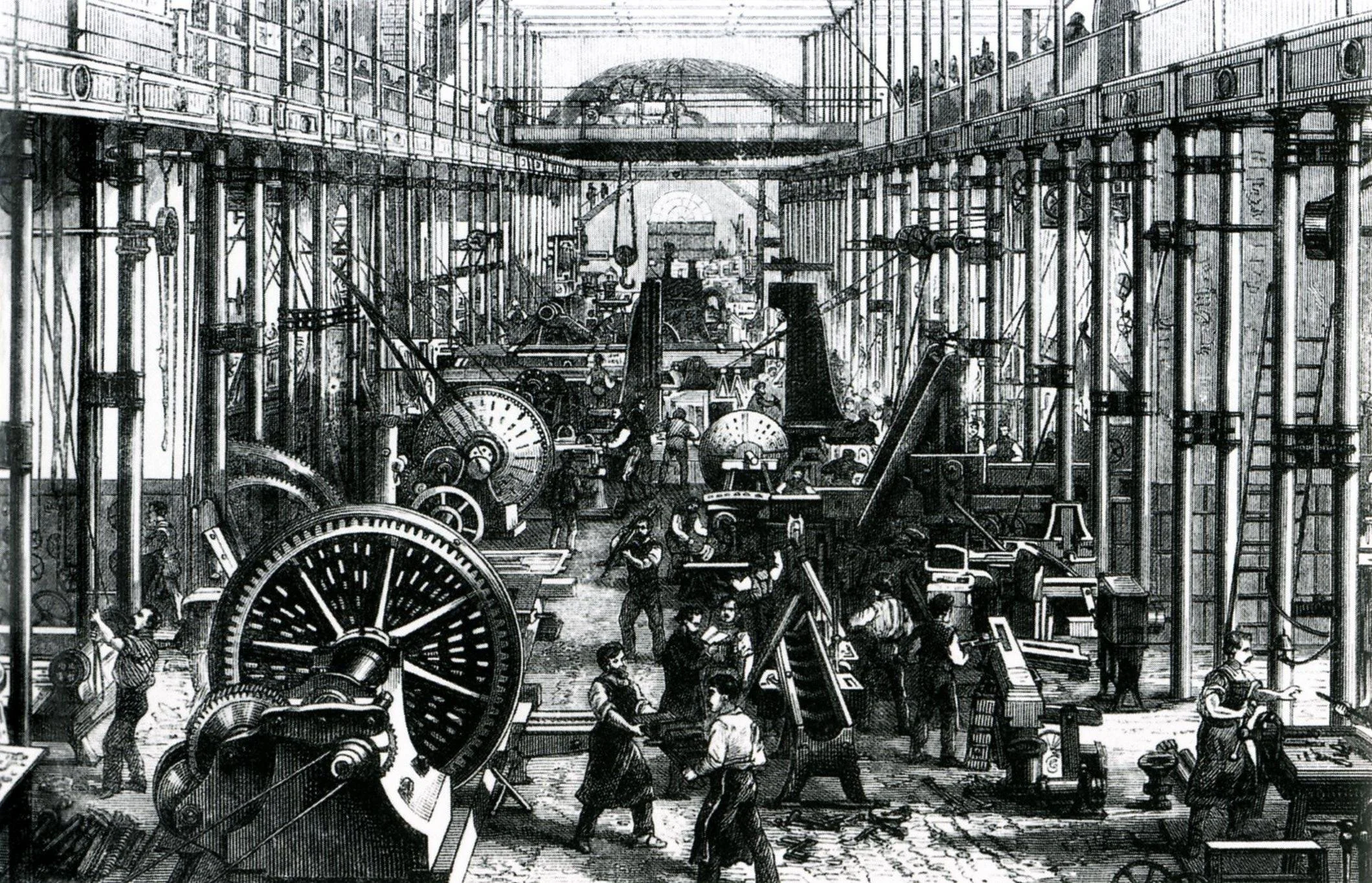
Think of the industrial revolution. Yes, machines took over a lot of jobs, but they also created new ones and made the world faster. So that’s the selling point, right?
The thing we should be worried about is that a lot of the things AI is being touted for are the intellectual things that make us human. Cognitive tasks. I’m hoping we find a better way of making it work for us.
The reality of right now and the next five years is that people need to reskill, be less square about how they do things. Even if you don’t like it, your own adaptability is what will keep you afloat.”
While Joseph works a job she enjoys and is highly skilled at her job, she doesn’t consider anyone an exception to this rule: We all need to keep learning. Learn new skills for your career, but also learn for the sake of learning. The more you learn, the better you are at learning, which means you’ll keep your brain fresh.
How should we use AI? How should we engage with this technology?
Saria: “I’ll start with this: Every new thing - every new technology - in a sense takes something from us. We no longer need to sew our own clothes or harvest our own food, so we don’t learn how to do that. We lose things, we gain things.
What you need to do is always ask yourself this question: What is this going to cost me?
If you ask it to do your first draft of writing - this is actually being studied - it is losing you so much cognitive capabilities and giving you cognitive debt. That means it isn’t just taking something from you, it’s giving you negative debt. Essentially a handicap. It is robbing you of those first moments of sitting in discomfort, trying to decide how to proceed. But the discomfort and initial research is the main point where your brain starts to make connections and draw conclusions that end up shaping your entire text.
But also consider children: What will it cost a child to use AI for their homework? In a sense, your child is not losing anything, because they never learned how to do it in the first place. However, what will happen in a few decades when several generations have simply never learned to think?”
Out of curiosity, I asked Joseph how she would define “responsible AI”, but she very concisely answered that “I don’t believe there is such a thing, really.” Her reasoning is more nuanced than simply saying that all AI is irresponsible, because “responsible AI” is a discipline that relates to how the technology impacts the world with the way it is used.
Of course, the ethics of tech should be considered while it is being built. People in the industry need to do their best to remove negative biases during the training of the model. Interestingly, this is something that sets Claude apart from for example ChatGPT:
Saria: “Claude is trained on something called Constitutional AI. ChatGPT is trained by simply telling it what’s good and bad.
Constitutional AI is when you train it kind of like how you teach your kid to recognise good or bad. You don’t have to tell it directly. You’re teaching it what the metrics are of something “good”. Like the UN, all humans are born equal, and then you infer from that.
For ChatGPT, you might say “don’t call people X”. So it knows, for example, to not use slurs to refer to people. Not because it infers that it’s good or bad, just because it’s been told to. ChatGPT doesn’t know what equality is.”
Responsible use of AI also comes down to us, the consumers. One thing is keeping our own brains fresh by not using AI for every creative task. Being responsible would also mean not feeding AI things that don’t belong to you. Don’t use Gemini to learn how to hack security systems. Don’t rehash the fight you had with your partner with ChatGPT in pursuit of an “unbiased opinion”.
Basically, responsible AI has to be a combination of both: Responsible people in the industry, and responsible users. But nothing is every truly black and white:
Saria: “Take climate change. They told us this would happen in the 70s, and yet now we’re here and everyone is told to recycle at home. However, the hard truth is that recycling your milk carton is not going to save the world. It’s a way for the big guys to shift blame onto the individuals, and sure, you can say the AI companies are doing a similar thing. A gun doesn’t kill, humans do - but humans kill easier with a gun, no?”
In the bigger picture, the only way you can really ensure that you’re using AI “responsibly” is by simply staying informed.
“We’re moving towards a place where intellectual literacy will be the new financial literacy,” says Joseph. The only way to stay ahead and avoid the WALL-E scenario is to stay informed.
The fact that LLMs use whatever they are fed to further their systems is indeed essential to remember when it comes to making responsible choices. This basically means that anywhere public where you put your art or information can be taken by someone and fed into an LLM. In this case, being responsible is not just about how you use AI, but how you engage with a society - especially online - where AI exists.
When I asked Joseph if she believed we should be protecting our creativity and information more online, she had two answers. The simple answer was this: “You should be careful and be aware of what you’re sharing. But ultimately, it’s up to you.” The longer one was this:

Saria: “Have you ever watched Naruto? You know Orochimaru? He’s the villain, but his purpose of living forever started off fairly innocently. He believed that as a human, you don’t have enough time to learn everything worth learning, so he was collecting as much knowledge as possible. This is why I’m so happy to live during this time, where all sorts of knowledge and art is available straight on my phone. I can take courses and access amazing art from people I’ve never met.
So yes you have to be mindful and guard what’s yours. But then again, wouldn’t it be sad if your favorite artist stopped posting on instagram out of fear or AI?”
Returning to the world of work, if we are to expect that AI will continue to change the way work, well, works, then what can we do to stay on top? While Joseph of course isn’t an expert in every industry and can’t tell us exact hard skills we would need for each job, I still ventured to ask what she thinks is most essential to work on right now:
Saria: “Stop putting yourself in a box. “I’m a copywriter, I’m a UI designer”; no, you’re a person who is able to do something. Tell me what you can do, not just what you are. Tell me how you think, not just what you think.
You need to be a full human. You need to be resilient - in life and in work. You need high agency. You need to be able to form an opinion based on data.
If you’re a specialist in your domain, you need to stay up to date and stay vigilant. You need to be able to spot bullshit now more than ever. Research skills are more valuable than ever.”
I’m noticing you’re not saying stuff like “learn how to prompt” or “AI literacy”?
Saria: “That is surely relevant, but what’s also really important is simply being human.
See, if you keep your wits about you, you’ll be better at keeping up with trends. If it becomes relevant for your field to pick up Python coding, it’s your brain that’ll tell you to pick it up if you judge it is truly important. For example, if you say “I’m a UI designer, I don’t do UX”, well you’re gonna have to. Because soon, companies might not need someone who “just” does UI. You have to upskill.
I often hesitate to talk about hard skills for work. Because today it might be AI literacy, tomorrow it might be something different. You might spend the next year learning how to use a software that goes obsolete in 6 months.
Think of it like this: where before, you maybe needed to be a 10/10 at your specific specialty to get the job; these days, you’re more likely to need to be a 7/10 at a few different things.”
Considering Joseph’s stress on being responsible with our personal use of AI and maintaining our ability to sit in discomfort, you might think this could evolve into a moral stance against using AI altogether. But that’s not the point she is trying to make at all.
The most important thing to remember about generative AI, is that, no matter how much you put into it, the output is not your brainchild. Think of it like this: If your child draws a doodle and tells you it is a cat, does that mean they drew a cat? The kid might send that picture to ChatGPT and ask it to turn it into a cat. That still doesn’t mean the kid drew a cat, it just means they understand the concept of a cat and know how to explain it. Similarly, if you describe a story idea to an LLM and it spits out a novel, that does not mean you wrote a novel. It means you had an idea and you know what a novel is. Everyone has ideas.
All of this to say: If you want to not be left behind, you have to remain human and maintain your own creativity.
Saria: “I do use AI, but the main point of this whole thing is that it has to be used with care. I’ve “trained” my model - although no, you don’t train an LLM, you let it get used to you. It will not validate me. I don’t anthropomorphize it. I don’t talk to it like a person. I don’t say please and thank you. I don’t “prompt it”; I just say what I want it to do. I have an instruction on it that says “if you don’t know, tell me you don't know”. Yet, it still hallucinates, because I cannot control how it’s trained. But at least I know, because I know how it works.”
Do you see your social account as a form of “future proofing” your career with thought leadership?
Saria: “I guess it’s a type of thought leadership. But my account is not the main way I “future proof” my career. I stand by the fact that the main thing we need to do is to keep learning. Keep your brain fresh. So then, my account is a way for me to do that. I sit down and write scripts. I do research. I edit. It’s a lot of practical work and creativity.”
My final question to round this whole thing out is this: What is some of the best career advice that you want to give to women?
Saria: “A lot of people attribute effort with results, like they deserve something after a certain amount of effort. However, if I put all my strength into moving a wall, the wall isn’t suddenly going to become liquid.
You could be doing something, putting a lot of effort into it, but if your process is random and you have no true purpose or plan, then the truth is your long term efforts will be wasted.
Put the effort where it matters. See the patterns and try out new things. And I cannot stress this enough: Always keep learning!”
I want to say a massive thank you to Saria Joseph Beainy for taking the time to have a 3 hour conversation with me in the scorching heat back in June! If you want to learn more about AI and be up-to-date with all the news, I can definitely recommend giving Saria a follow on her Instagram @TheCorporateFlamingo.
