
Your CV Gets You an Interview. Your Personality Gets You a Job.
By: Slava Denys
Finding a job in Denmark is not just about proving what you can do. It is about showing who you are. But how do you stay yourself in a culture you are still learning to understand? Slava Denys spoke with Danish recruiter Winnie Sønderkær Rechnagel about the unwritten rules of Danish workplaces, the magic of soft skills, the frustration of rejection, and why being yourself might be your biggest competitive advantage.
Imagine this.
You have 10 years of experience. Maybe 15. An impressive CV. International projects. Big clients. Strong results.
You know your stuff.
You arrive in Denmark. Start applying. Rewrite your CV. Polish your LinkedIn. Prepare for interviews.
You do everything right.
Or at least everything you think is right.
And then comes the famous sentence.
"We decided to move forward with someone who is a better fit."
A better fit?
What does that even mean?
Should you smile more? Talk less? Be more confident? Less confident? More Danish?
Should you become a completely different person?
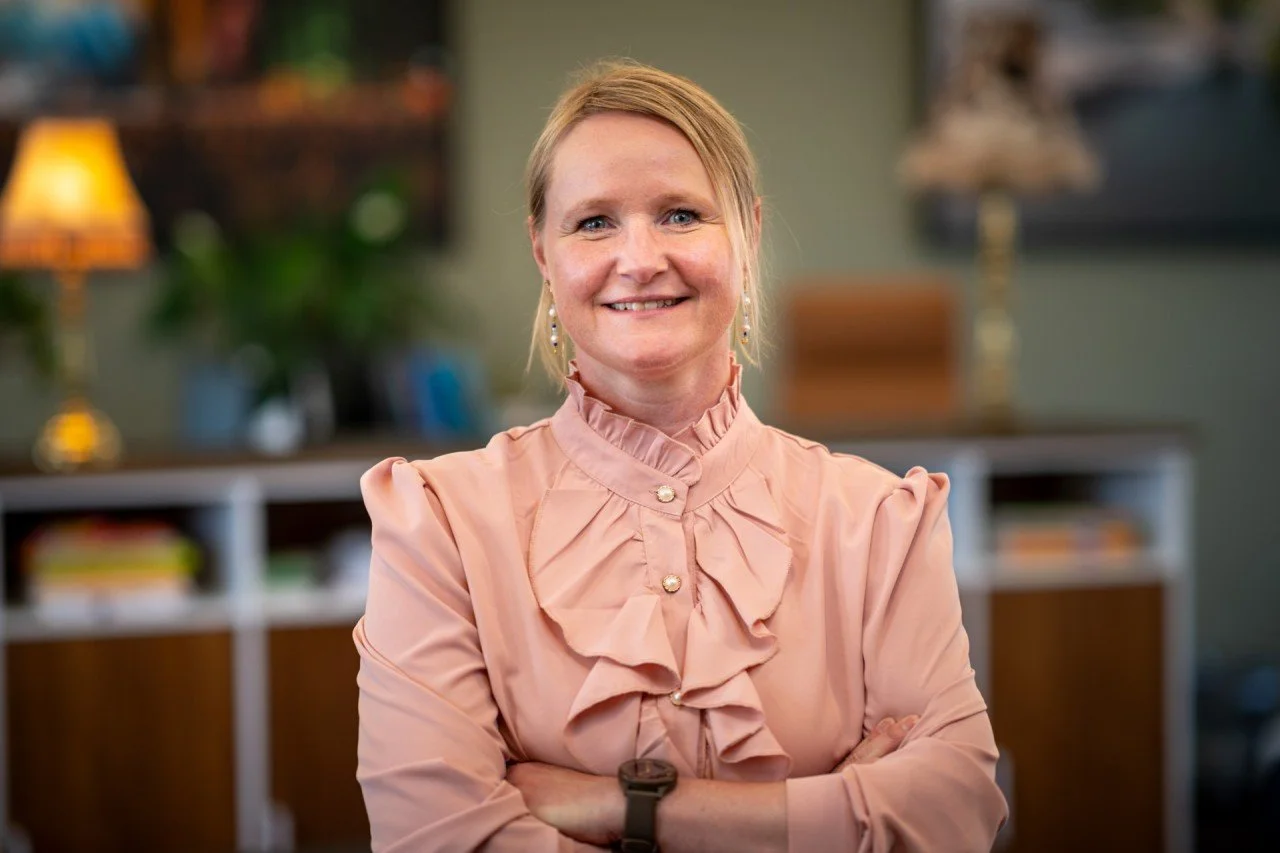
Meet Winnie Sønderkær Rechnagel. A Danish recruitment and HR consultant with years of experience in recruitment, leadership development, and career counselling.
And our conversation revealed something interesting.
In Denmark, your personality is not an extra feature. It is part of your professional qualifications.
Your colleagues are not just your colleagues
In some countries, work is work.
You come to the office. Do your job. Deliver results. Go home.
Your professional skills speak for themselves.
In Denmark, things are a little different.
"We are quite invested in our colleagues as we spend so much time together," Winnie explains.
Danish companies want to know more than whether you can do the job.
They want to know whether people will enjoy doing the job with you.
Can you build relationships? Can you cooperate across departments? Can you work independently without becoming a one-person island?
Can you be confident without dominating the room?
Sounds simple.
But for many internationals, this is a completely new game.
We spend so much time proving that we are competent that we sometimes forget to show that we are human.
And humans hire humans.
Not CVs.
Please stop being a corporate robot
Here is my favourite part of our conversation.
I asked Winnie whether recruiters can recognise when candidates are trying too hard to say the right things.
Her answer?
Yes.
"It feels mechanical as if speaking to a chatbot."
Ouch.
Imagine spending days preparing the perfect interview answers. Memorising all the right phrases. Practising your strengths and weaknesses. Watching endless videos about how to impress Danish recruiters.
Only to sound like ChatGPT in a blazer.
Winnie believes the problem partly comes from the army of career gurus teaching people how to "smash" interviews.
The result?
Everyone learns the same answers.
Everyone tries to look perfect.
Everyone sounds suspiciously similar.
And somewhere in this performance, the real person disappears.
The more you try to become the candidate they want, the less they get to see the candidate you are.
Confidence is good. Bragging is not.
This one is particularly tricky.
Many internationals come from cultures where job interviews are about selling yourself.
You highlight your achievements. Demonstrate your ambition. Explain why you are better than everyone else.
You are basically a walking advertising campaign for yourself.
But Danish recruiters are not necessarily buying that campaign.
"Never brag, ever," Winnie says.
Instead, she suggests something beautifully simple.
"How would you describe to your best friend what you're good at?"
Think about it.
You probably wouldn't tell your best friend that you are an outstanding visionary leader with exceptional cross-functional capabilities.
Unless you wanted to lose that friend.
You would just explain what you are good at. What you enjoy. What makes you proud.
And probably mention a few things you struggle with.
Which brings us to another Danish paradox.
Your weaknesses might actually make you stronger
Yes. Really.
Winnie says she wants to hear about your weak spots.
Not because she is looking for reasons to reject you.
Because she is looking for self-awareness.
If you understand your weaknesses, your future manager can understand how to support you.
If you pretend you have none, that becomes a problem.
Nobody expects perfection.
But they do expect reflection.
And that might be one of the most underestimated soft skills in a Danish workplace.
The ability to say:
I am good at this.
I struggle with that.
I am working on it.
No drama. No excuses. No corporate theatre.
Just a human being who knows themselves.
Your manager is not the king of Denmark
Another cultural surprise.
In many countries, managers are managers. There is a hierarchy. There is distance. There are rules about how to communicate.
In Denmark?
Your manager might sit next to you. Eat lunch with you. Ask for your opinion. Expect you to disagree.
Politely, of course.
Winnie explains that Danish workplaces generally have flat hierarchies.
And excessive formality can create distance where nobody wants it.
You are expected to be friendly. Approachable. Independent.
But still respectful.
It is a delicate balance.
Not too formal.
Not too casual.
Not too dominant.
Not too quiet.
Basically, Danish workplace culture sometimes feels like trying to ride a bicycle while carrying a cup of coffee.
But there is a simple principle behind it.
Be yourself. Just remember that other people are in the room.
Your ambition is welcome. But make it bigger than yourself.
I found another point from Winnie particularly interesting.
In some cultures, ambition is about personal success.
A promotion. A bigger title. More responsibility. Higher numbers.
Nothing wrong with that.
But in Denmark, ambition often resonates better when it includes the team.
What can we achieve together?
How can I help my colleagues succeed?
How can we create a better working environment?
Winnie also points out that success is not always measured in KPIs.
It can be psychological safety. Employee engagement. Stronger relationships. Fewer sick days.
Things that rarely make it into a glamorous LinkedIn headline.
But make a huge difference in real life.
"Not the right fit" is not a verdict on your personality
Now, let's talk about rejection.
Because international job searching in Denmark can sometimes feel like collecting rejection emails is your full-time job.
Winnie offers a perspective worth remembering.
If 100 people apply for one position, 99 will be rejected.
Ninety-nine.
That doesn't mean 99 people are incompetent.
Sometimes another candidate simply matches the team better.
Sometimes a recruiter knows that a particular team is conservative and a highly energetic, idea-driven candidate might struggle there.
Even if that candidate is brilliant.
And sometimes the competition is just enormous.
So what can you do?
Ask for feedback.
Change your approach.
Try networking. Coffee meetings. Job fairs. Volunteering.
Winnie emphasises how important networking is in Denmark. Most of her own jobs came through her network.
And yes, learning Danish matters too.
Not because Danes cannot speak English.
They can.
But language helps you build relationships. Professionally and socially.
Even when Danish pronunciation feels like an elaborate practical joke.
Maybe the magic is not in fitting in
After talking to Winnie, I kept thinking about one thing.
When you move to another country, you have to learn so much.
A new language. New workplace rules. New expectations. New ways of communicating.
And somewhere along the way, it is easy to start questioning yourself.
Maybe I am too direct.
Maybe I am too emotional.
Maybe I am too ambitious.
Maybe I am not Danish enough.
So you adjust. And adjust. And adjust.
Until you risk becoming someone you barely recognise.
But here is the interesting part.
Danish recruiters want authenticity.
They want self-awareness.
They want people who can connect with others.
And none of those things requires you to erase your personality.
Of course, you need to understand the culture. Learn the rules. Adapt your communication.
But adapting is not the same as disappearing.
Your hard skills tell employers what you can do. Your soft skills show them what it feels like to work with you.
And your personality?
That is what makes you different from the other 99 candidates.
So maybe the next time you prepare for a job interview, don't ask yourself:
How can I become the perfect Danish candidate?
Ask something else.
How can I help them see the real me?
Because the goal is not to convince every company to hire you.
The goal is to find the company where your skills, your personality, and your way of working belong.
And sometimes, the most powerful thing you can bring to an interview is not another polished answer. It is yourself.