
Building Wealth with SKAT in Mind
What International Women Should Know About Danish Investment Tax
By: Val Khorishko
Learning the ropes of investment tax in a new country might seem intimidating, but mistakes can come with a hefty price tag. At the same time, avoiding investing altogether has a cost of its own – missing out on compound effects of the market and losing opportunities for financial empowerment. To make sense of this highly nuanced topic, Career Club DK’s Newsletter Manager Val Khorishko brings on board William Nilsson, a tax expert at SkatteInform — a Danish accounting firm with more than 25 years of expertise in tax for foreigners. In his guest article, William explains the country’s unique approach to investment tax, deciphers specialized terms, and highlights common pitfalls and ways of avoiding them.
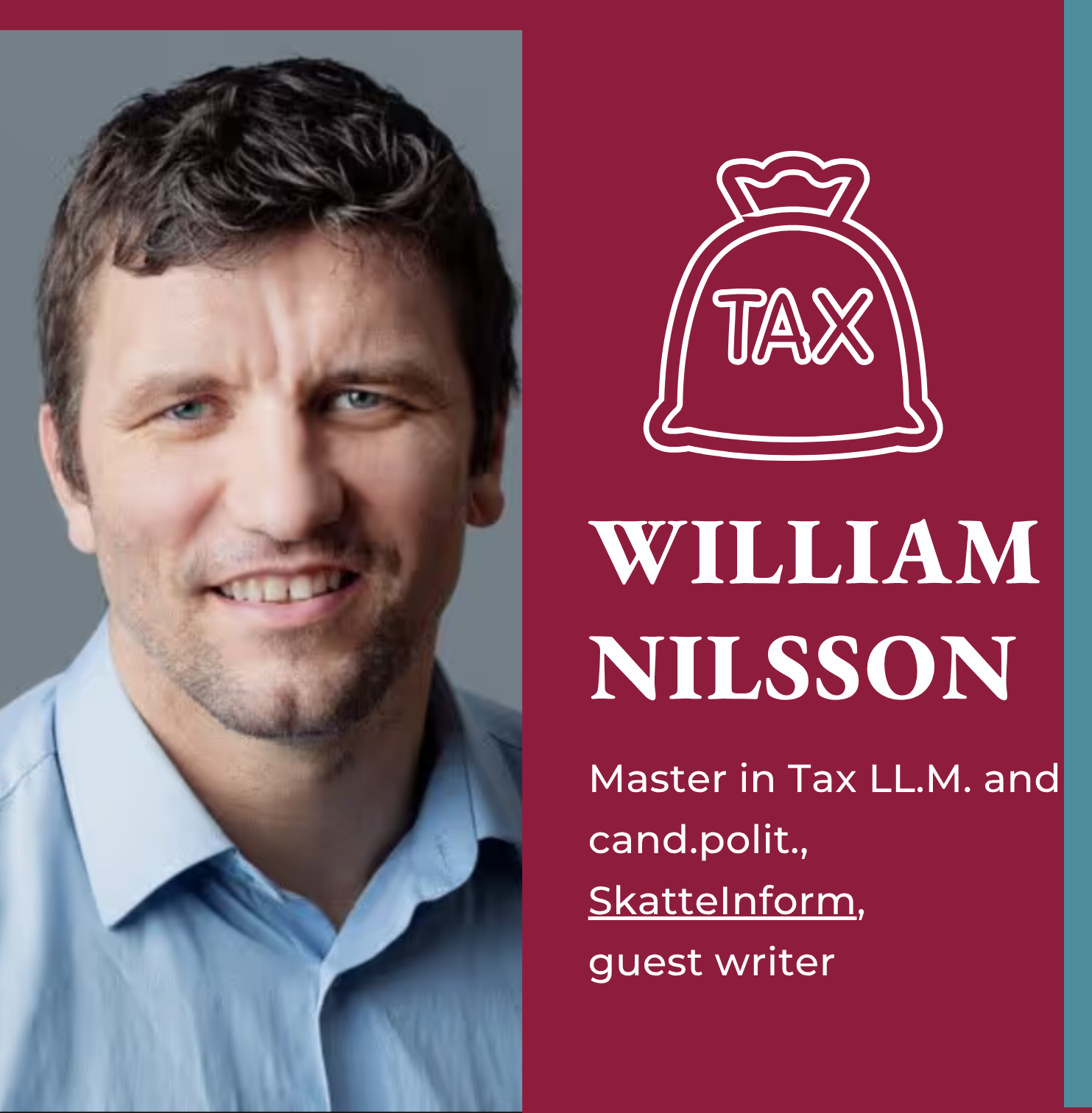
By William Nilsson, Master in Tax LL.M. and cand.polit., guest writer
If you've moved to Denmark from somewhere else, you've probably already discovered that Danish tax rules don't work quite the way they did back home — especially when it comes to investments. Denmark taxes investment income in ways that are genuinely unusual by international standards, and a few of the most consequential rules are also the easiest to miss, because nothing about them is intuitive if you learned "how tax works" somewhere else.
The single biggest adjustment for internationally minded clients isn't the tax rates. It's that Denmark taxes some investments every year, whether you've sold anything or not. People arrive expecting the rules they grew up with — you pay tax when you cash out — and that assumption alone causes more expensive surprises than anything else I see.
The rule that catches almost everyone: tax on paper gains
Most countries only tax investment gains when you actually sell. Denmark doesn't always work that way. A large category of investments — most accumulating funds and ETFs, in particular — are taxed under what's called lagerprincippet: your position is valued every 31 December, and you owe tax on the year's increase whether or not you sold a single share.
This is the rule that most often shapes what my clients end up investing in. If you're taxed annually on growth you haven't actually received in cash, that creates a real liquidity problem — you can owe money on paper gains and will probably have to sell shares to pay the tax. Because of that, a lot of investors here end up leaning toward individual shares, or Danish and approved funds, specifically to avoid that yearly tax bill on unrealized growth.
Whether a specific fund gets this treatment — or the friendlier, sell-when-you-sell treatment — depends on details most people never think to check: whether the fund distributes income or reinvests it, and whether it's been specifically approved by the Danish tax authority, Skattestyrelsen. Two funds that look almost identical from the outside can be taxed completely differently in Denmark.
This is genuinely one of the most common — and most expensive — mistakes I see. Someone buys a well-known, low-cost international ETF, assumes it's taxed the same as a Danish share, and finds out years later, sometimes during a tax review, that it should have been taxed differently the whole time. The correction reaches back across every year they held it.
A gain and a loss aren't worth the same in tax terms
There's a further wrinkle worth knowing about if your fund falls into the less favorable category — taxed as kapitalindkomst (income earned from wealth, assets, or savings) rather than aktieindkomst (income earned from investments in stocks and shares). People assume that if a gain is taxed at a certain rate, a loss the following year gives you back roughly the same amount. For kapitalindkomst, that's not true, and it catches people by surprise.
Here's why: a gain taxed as kapitalindkomst can reach up to 42%. But a loss doesn't reduce your tax bill at the same rate. The deduction value of a loss in this category is only around 33% for the first 50,000 kroner — 100,000 for a married couple — and it drops to around 25% above that. So if you have a 100,000 kroner gain one year taxed at up to 42%, and then a 100,000 kroner loss the next year, you don't come out even, even though your actual return across the two years was flat. The loss is worth less to you than the gain cost you.
This has been true since a tax reform back in 2009, so it's not new, but it's exactly the kind of detail that's easy to miss if you're used to a country where gains and losses are treated as mirror images of each other. If your portfolio includes bond-heavy funds, or foreign funds that haven't been approved for the better tax treatment, this is worth understanding before a volatile year catches you off guard.
The aktiesparekonto: a shelter worth knowing about
One practical tool for reducing this friction is the aktiesparekonto (ASK) — a special account offering a flat 17% tax rate, well below the ordinary rates that can reach 42% on share income. The current deposit ceiling is 174,200 DKK for 2026.
For anyone building an investment habit here, the aktiesparekonto is usually one of the first things I bring up. It's not going to hold your entire portfolio, but the tax difference is significant enough that it's worth using fully before putting money anywhere else.
There's also a proposal on the table — not yet law — from the new government to raise that ceiling to 500,000 DKK, alongside a possible simplification of how the annual tax is calculated. If that goes through, it will meaningfully change how much of a portfolio people can shelter this way. But it's still just a proposal. I'd encourage clients to plan around today's rules and treat the higher ceiling as a nice possibility, not something to bank on yet.
The "garden gate": what happens when you arrive, and when you leave
Denmark has a colorful nickname for one of its most distinctive rules: havelågebeskatning, or "garden-gate taxation." It works in both directions.
On the way in, when you become fully tax liable in Denmark, only the growth in your investments from that point forward is taxed here — value you built up before moving isn't touched. On the way out, if you later leave Denmark for good, unrealized gains on your Danish-era share portfolio can be taxed as if you'd sold everything the day you left — an exit tax.
The garden-gate principle is symmetric and, frankly, quite fair once you understand it. But both halves only work correctly if the paperwork is done at the right moment. If you don't report the identity, quantity and value of your portfolio before the 1st of July the following year when you arrive, you lose the ability to prove later which part of your gain happened before Denmark and which happened here. And if you leave without addressing the exit tax rules, you can be caught off guard.
There's an important exception worth knowing, especially for anyone here on a fixed-term arrangement: the exit tax on shares generally only applies if you've been liable for Danish tax for at least 7 years within the 10 years before you leave.
Many of the women in this [Career Club Denmark] community are here on Denmark's expat tax scheme, which itself runs for a maximum of 7 years. It's easy to assume those two 7-year periods are the same clock — they're not. Whether you leave in year 6 or year 8 can be the difference between no exit tax exposure at all, and a full tax bill on your entire unrealized gain. This is exactly the kind of thing worth checking well before you've made a decision to leave.
Moving away doesn't end your Danish tax the moment you update your address
One mistake I see regularly: assuming that changing your address in Denmark's civil registration system (CPR) is the same as ending your tax liability.
It isn't, and this trips up more people than you'd expect. Danish tax liability depends on whether you still have housing available to you here — not on what your CPR record says. I've seen cases where someone's CPR address showed they'd moved abroad years earlier, but because they kept access to a home in Denmark, or never separately notified the tax authority, their full tax liability had technically continued the entire time.
My advice for anyone planning to leave Denmark: genuinely give up your Danish housing — through a sale, or an unconditional minimum 3 -year lease you can't take back — and notify Skattestyrelsen directly, rather than assuming your change of address elsewhere takes care of it.
Foreign brokerage accounts: the deadline almost nobody knows about
If you kept an investment account from before you moved to Denmark, or opened one with a foreign broker since arriving — Schwab, Interactive Brokers, DEGIRO, and similar platforms all count — there's a specific, unforgiving deadline attached to it.
Danish banks report everything to the tax authority automatically. You never have to think about it. Foreign brokers generally don't. So the responsibility falls on you, and there's a hard deadline: 1 July of the year after you buy something, or after you move to Denmark with an existing portfolio, to report it yourself.
The consequence of missing it isn't gentle. Gains are still taxed no matter what — Skattestyrelsen doesn't need your cooperation to collect on the upside. But if you didn't report a security by the deadline, you lose the right to deduct any loss on it, permanently, with no way to reopen the case later. I saw this hit a lot of people after 2022, when markets fell broadly. People who'd never bothered reporting some of their foreign holdings discovered, at the worst possible moment, that losses they assumed would offset other gains simply couldn't be claimed.
My practical advice: treat reporting a new foreign investment account as a same-year task, not something to sort out at tax time. Report everything, before the 1st of July in the following year you buy it, without exception. It's the only way this deadline never becomes a problem.
There's also something important to understand about what happens if Skattestyrelsen finds an unreported account on their own — which does happen; they've been actively writing to people with accounts at platforms like DEGIRO, eToro, Interactive Brokers, and Revolut. When that review happens, it only runs one way. Any gains they find get taxed, going back across every year you held the position. But losses on that same account generally aren't recognized in the same review, because the correct information was never filed on time. You don't get a fair, balanced reconstruction of your trading history — you get taxed on the upside and denied the downside. On top of that you can get fined for the tax evaded, if the tax authorities find out before you submit the tax return. That one-sidedness is exactly why I tell clients not to wait for a letter from Skattestyrelsen to sort this out.
Selling your home is usually tax-free — but "usually" is doing some work
Many people assume selling a primary residence in Denmark is automatically tax-free. The starting point is actually the opposite: property gains are taxable by default, with two specific, conditional exemptions carved out — one for a primary residence (the "parcelhusregel"), and a separate one for a personally-used summer home.
The exemption for your own home is genuinely generous, but it isn't unconditional. You need to have actually lived there for part of the time you owned it — not just have it registered as your address. And if the land is unusually large, or part of the property was rented out or used for something else, that can affect whether the whole gain is taxable.
Letting family live in a property you own
A less obvious situation that comes up more than you'd think: what happens tax-wise when a property is shared across generations, rent-free or below market rate.
If you buy a property for your child to live in, you're taxed on market rent whether or not you actually charge it. The reverse situation — a child letting a parent live somewhere — has a friendlier rule available, but only if the home is genuinely connected to where the child themselves lives. For most of the international families I work with, that condition simply doesn't apply, because the property their parents live in is back in their home country. In that case, the friendlier rule isn't available, and the fictive rent rule applies just as it would for the other direction.
The thread is running through all of it
Every rule above is traced back to the same underlying pattern. Danish tax authorities get in-depth, automatic information about anything held with a Danish bank, and comparatively little about anything held abroad. So the practical habit I'd want every internationally-minded person in Denmark to build is simple: document everything — your portfolio value, your property arrangements — at the exact moment it crosses a Danish tax boundary. When you arrive, when you open a foreign account, when you leave. None of these rules give you a way to fix that documentation retroactively.
A note on this article: everything above is general information, current as of August 2026, and reflects common situations rather than any individual's specific circumstances. It is not personal tax advice. Danish tax rules depend heavily on individual facts — your residency history, your account structures, your family situation, and the specific countries involved — and small differences in those facts can change which rules apply. The aktiesparekonto ceiling increase discussed above is also a government proposal that has not yet been passed into law and should not be relied on for planning purposes yet.
If anything in this article sounds like it might apply to you, we'd encourage you to seek individual advice before acting on it, rather than relying on general information alone.