
Penny for your thoughts? How loans work in Denmark
A 3-part guide to important loan terms and what to look out for
By: Milie Fiirgaard
No matter what your career is, we can all agree on one thing: life is expensive, and being an adult (unfortunately) means we have responsibilities and an annoying amount of bills to pay. Whether you’re moving into your first house, buying a new car, or simply navigating a temporary financial rough patch, there often comes a time when you start wondering if you have no other options than to take out a loan - other than asking dear old mom and dad for help, of course.
Decoding financial terminology in your own language is certainly hard enough, having to figure it out in Danish is an entirely different potato to try and swallow - and pronounce without the bank advisor looking at you like you just spoke Swedish (beware: speaking Swedish in Danske Bank may result in higher interest rates.)
So, before you give up your voice for financial legs (subtle HCA reference * ), here is a breakdown of essential terms and details that you should know before taking up loans in Denmark.
Part 1: A dictionary of the most important terms you can’t afford to mispronounce
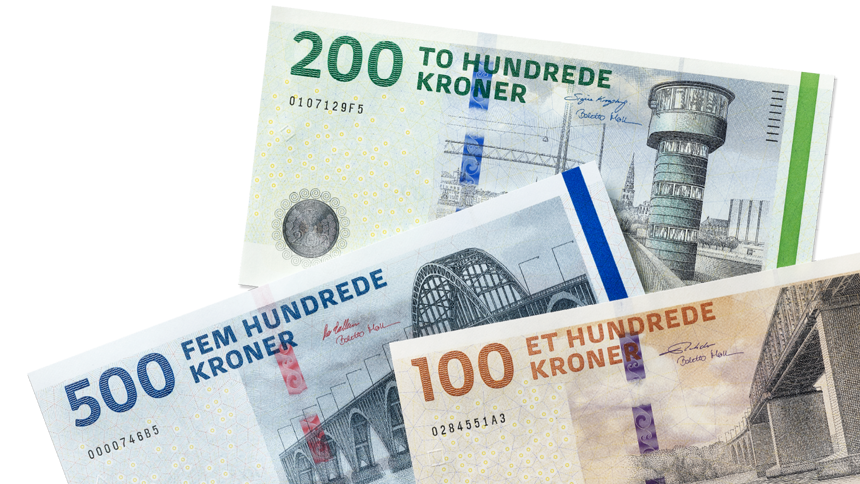
Credit: nationalbanken
ÅOP - Årlige Omkostninger i Procent (APR)
In English, this is called the APR (Annual Percentage Rate). If you take anything away from this whole article, let it be this: always check the ÅOP!
This is the number that tells you how much the loan will actually cost, because it includes all related costs. Any possible fees and additional rates alongside the basic interest rate for your loan.
It’s important to note that, in Denmark, it’s illegal for a loan to have an ÅOP above 35 %. Additionally, if a lender is actively advertising, their loans cannot exceed 25 %.
This is mainly relevant to know if you’re looking at online loans and private loans, as bank loans generally have a lower interest rate anyway.
Rentesats (interest)
The percentage you pay in interest on the loan.
Månedlig ydelse / afdrag (monthly payment)
This refers to the amount you pay monthly when paying back the loan. Because remember: A loan is not free money. You sign a legally binding contract, promising to pay back everything you borrowed and more.
The process of paying back the loan in the vast majority of cases involves monthly installments that you pay until the loan is paid out. The amount for the installments depends on the initial amount you borrowed and the duration of your loan.
These monthly installments can be consistent, meaning it’s the same amount every month, or they might vary depending on the type of loan you have.
Løbetid (duration)
This does, in fact, not refer to the time it takes you to run a 10k with King Frederik ** ; instead, it’s the duration of the loan, meaning how long you are paying it back for. Different banks and lenders may have different limits for the durations they allow; however, there are some that are mostly just logical.
For example, it might be hard to get 5.000 kr. with a duration of 7 years simply because the monthly installment would be very low.
On the other hand, a 500.000 kr. loan with a duration of 4 months would require a monthly installment of over 125.000 kr, which, let’s be honest, most of us can’t afford (even with help from mom and dad).
It’s all about balance.
If you’re taking a loan at a bank, you’ll likely have the advantage of being able to ask an advisor for, well, advice. If you’re looking at private loans, however, make sure to be practical with the duration in terms of how much you can realistically pay each month.
Forfaldsdato (due date)
This refers to the due date for your monthly payments. Most of the time, banks and loan companies will have an automatic payment set up, so you don’t have to transfer money manually. All you need to do is just make sure that you have coverage on your account when your due date is coming up. However, in some cases, you may be able to set up a special agreement with the lender.
Hovedstol (principal)
No need to call Christian the Tyrant *** to sit on this IKEA chair: this term means “principal”, aka the amount of money that you apply for. Usually, also the amount that hits your account after the loan is approved.
Gebyr (fees)
Speedround: Oprettelsesgebyr, administrationsgebyr, rykkergebyr, indfrielsesgebyr, and a big finish with morarenter and strafrenter.
Sorry, that’s a lot. The important thing to know here is that “gebyr” means “fee”. Everything listed above is essentially different types of fees that lenders can apply to your loan. This is why looking at the ÅOP (APR) is so important.
Even so, you should still check for things like this, especially if you’re looking to take up an online loan.
⇒Is there an origination fee? Meaning, you pay a fee to set up your account.
⇒Is there an admin fee? Meaning you pay a fee (monthly or yearly) for the lender to administer the loan.
⇒Is there a fee for early repayment? Meaning it costs you extra to pay out the loan before the agreed duration.
⇒Are there late fees or added interest rates in case you default on your monthly payment? (most likely yes.)
Make sure to check all of this to be fully informed about what the loan is going to cost you, so you avoid any unpleasant surprises.
Betalingsplan (payment plan)
This is your payment plan. This overview shows the duration of your loan, the due dates for each monthly installment, as well as the amount that you’ll be paying each month.
You’ll often either receive this as a PDF or you’ll be able to access the overview somewhere online so you can keep track of things. Some loan agreements will allow you to alter the payment plan after you’ve received the loan - it might be because you need to pay less for a few months, or perhaps you want to make a larger deposit one month.
But keep in mind that, as with a lot of this stuff, different lenders have different rules.
Lån med sikkerhed vs Lån uden sikkerhed (with or without security)
Don’t worry, it has nothing to do with self-esteem. In English, this is referred to as secured vs unsecured loans.
Taking a secured loan (med sikkerhed) means that you put up something you own as collateral - usually your house or your car. Thus, an unsecured loan (uden sikkerhed) means you take a loan without providing collateral.
Secured loans are typically for mortgages or bank loans that you take for larger purchases. They generally have lower interest rates than unsecured loans because if you default on your loan, the bank takes ownership of your car (not in a GTA way, more in a documents-and-legal way).
Unsecured loans generally have higher interest rates because the lender effectively runs a bigger risk in case you default, as they won’t be taking your car.
It’s completely up to you what type best suits your situation.
Kreditværdighed & Kreditvurdering / Kredittjek
Quickly in English: Creditworthiness & credit check.
By law in Denmark, all lenders have to carry out a credit check to ensure that consumers can realistically pay back the loans. This does not relate to “credit scores”, like they have in the US or the UK. In Denmark, you do not build up a numerical score based on financial decisions.
A credit check involves the bank or a third party looking through your finances to determine whether issuing a certain loan to you is responsible.
Your creditworthiness is thus what is determined during the credit check.
Example:
If you are applying for a loan where the monthly installments would be 3.000 kr., but you only have 1.000 kr. of disposable income a month, your creditworthiness isn’t great, and you would not pass the credit check.
It’s important to note, though, that a credit check doesn’t just consider your monthly disposable income; it determines overall risk. If your bank statements show frequent overdrafts, if you already have large debt, or if you have generally unhealthy spending habits, this can all count against your creditworthiness.
For foreign residents, banks also factor in your residency status and employment contract stability during this check.
Rådighedsbeløb (disposable income)
The easiest way to translate this is “disposable income”. It’s the amount you have left after paying all your monthly bills and necessities. That includes things like rent, phone and internet, subscription services (like Netflix, the gym etc.), groceries, transport costs (if you commute to work, for example), and more.
Of course, a Netflix subscription isn’t a necessity, but if it is a set part of your monthly bills, then it counts against your monthly disposable income.
That means:
Income - bills and necessities = disposable income.
Rentefradrag (tax deductible)
Google Translate tells me that the English term for this is “interest deduction” - I’ll do my best to explain what exactly that means in Denmark.
The Danish taxes are high - but we ALL pay them HAPPILY, of course… A deduction (fradrag) in this context refers to a deduction in tax. For loans, this means that the interest you pay is tax-deductible - not your repayments or related fees. Rentefradrag effectively lowers the real cost of borrowing.
Most banks and lenders in Denmark will automatically report the relevant information to SKAT, and it will appear on your tax assessment (årsopgørelse). However, it’s always good to double-check just in case, because it sucks to miss out on tax deductions (I pay my tax, I swear.)
Gældsfaktor
This is a number Danish banks obsess over. It is calculated by taking your total household debt and dividing it by your gross yearly income. For instance, if you earn 400,000 DKK a year and have 1,200,000 DKK in total debt, your gældsfaktor is 3. As a rule of thumb, Danish banks get uncomfortable when your gældsfaktor creeps above 3.5 to 4, especially if you are applying for a mortgage. The lower, the better.
Alright, now that we’ve decoded the jargon, you can go to part 2 to have a look at the actual loan types you’ll encounter in Denmark.
* Hopefully you’re familiar with The Little Mermaid? https://en.wikipedia.org/wiki/Hans_Christian_Andersen
** I’m not even making stuff up, you can in fact do some cardio with the royal family once a year: https://royalrun.dk/om-royal-run/about-royal-run/
*** Christian the 2. of Denmark: https://en.wikipedia.org/wiki/Christian_II_of_Denmark#:~:text=%5B2%5D-,Stockholm%20Bloodbath,-edit
Disclaimer: This article is for educational purposes only. Career Club Denmark is not liable for any decisions made based on the contents of this article. For financial advice related to your specific case, please reach out to your bank and/or financial advisor.
Sources:
General:
https://copenhagenexpats.com/glossary/kreditvaerdighed/
https://danskebank.dk/en/personal/products/loans/personal-loans
https://www.remember.dk/artikler/ordliste-forbrugslan/ (danish)
https://www.nordea.dk/privat/produkter/laan-og-kreditter/kassekredit.html (danish)
House loans and friværdi:
https://www.creditstar.dk/lan-til-hus-frivaerdi (danish)
https://www.lunar.app/en/personal/blog/internationals/how-to-buy-real-property-in-denmark
https://www.exploringdenmark.com/mortgage-denmark-foreigner/
Tax:
https://www.creditstar.dk/rentefradrag-pa-privatlan-sadan-sparer-du-penge-i-skat (danish)
