
Welcoming the new year
By: Slava Denys
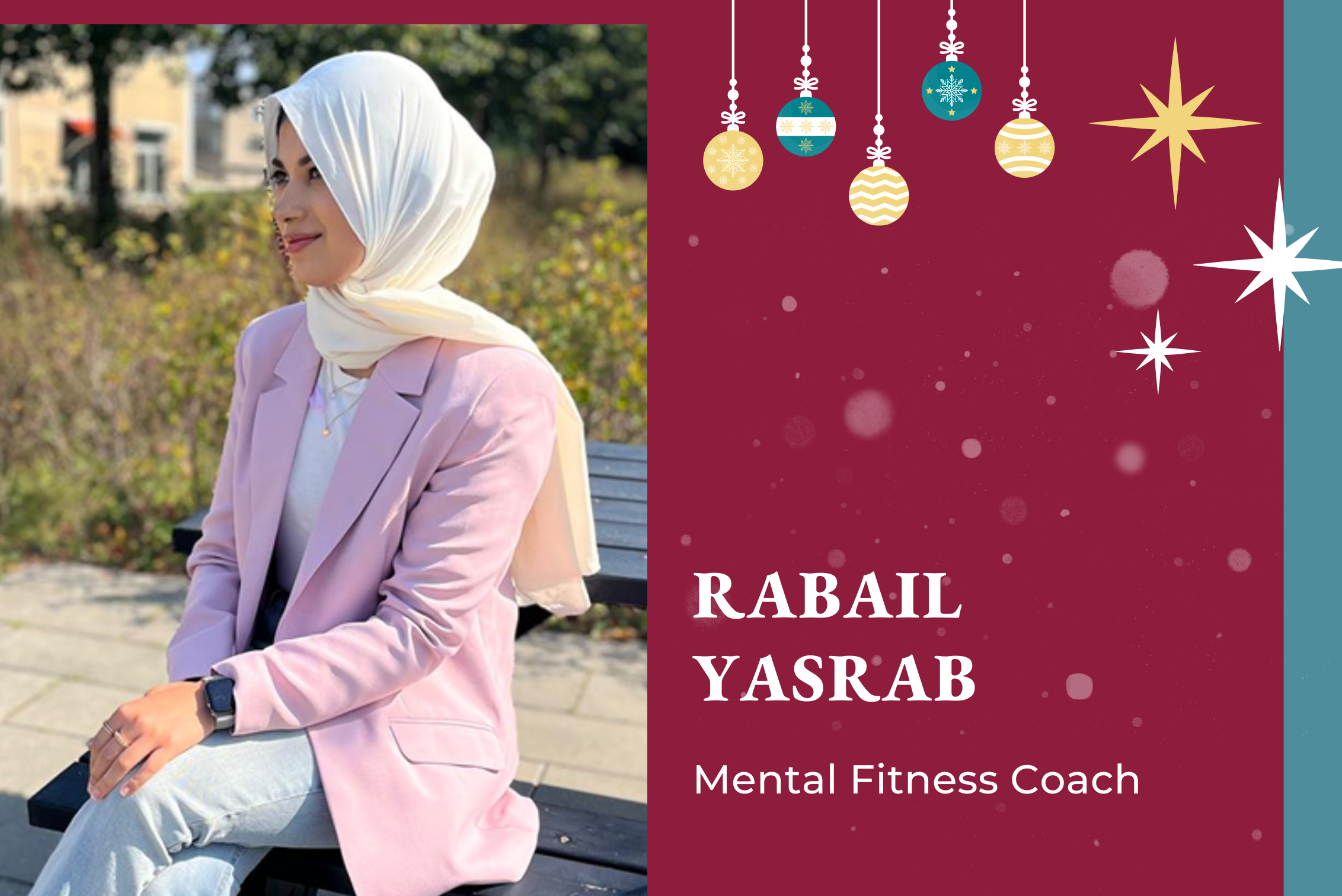
As the calendar edges toward 2025, the pressure to evaluate, reinvent, and perform kicks in hard. We act like the year needs a satisfying narrative arc before it “deserves to end”, and like January 1st is a moral reset button. But what if the win is not in finishing, but in noticing the journey while we’re still on the road? Slava Denys from the newsletter team talks with mental fitness coach Rabail Yasrab about seasonal pressure, holiday psychology, hygge versus hype, realistic change, and the art of celebrating your trajectory — even if your destination is still under construction.
Mindful celebration:
“Celebrate the 2025 journey, even if you haven’t reached the final destination”
Slava Denys interviewing mental fitness coach Rabail Yasrab
Slava: Let’s start big: why do humans obsessively review their year when time is basically a human invention? Helpful, or a mental booby trap?
Rabail: Reflection is how we create a plot line in what would otherwise feel like a blur. It gives a sense of continuity and meaning. The trap begins when the review turns into self-accusation — replaying failures instead of extracting learnings.
Slava: Why does December feel like psychological audit season? Why do we suddenly think our lives should make sense before January?
Rabail: Seasons give us psychological punctuation marks. They force a pause. The upside is clarity and motivation. The downside is stress, self-comparison, and mistaking reflection for a performance review of your existence.
Slava: Winter survival — what are the “duh but they work” tips Danish wellbeing people keep repeating?
Rabail: Light. Movement. People. Get outside even when it’s grey, flood your home with warm light, take vitamin D, and don’t isolate yourself. Winter works best for you when you stop trying to win it and start respecting its tempo.
Slava: New Year’s resolutions: why do they feel like judgment day with glitter?
Rabail: They act like a symbolic reboot button. But “new year, new me” often piles fantasy onto an unchanged nervous system and unchanged habits. Hope without architecture collapses fast. Resolutions carry so much weight because they symbolise a fresh start — the idea that we can reinvent ourselves overnight. This taps into our deep need for control and hope. But that same optimism can backfire.
When we set unrealistic or vague goals like “be healthier” or “be happier,” we’re chasing ideals, not habits. The result? Motivation fades by February. Real change happens when resolutions are grounded in small, consistent action — not perfection.
Example: Instead of “I’ll work out every day,” try “I’ll move my body for 15 minutes three times a week.”
Achievable resolutions are specific, measurable, and emotionally meaningful. Focus on what you really care about, not what you think you “should” do. Choose one or two goals, define what success looks like weekly, and celebrate every small win. Sustainable change is built on consistency, not intensity.
Example: Replace “I want to eat better” with “I’ll prepare one homemade meal on Sundays to start my week feeling grounded.”
Slava: Year-end emotions swing between euphoria and existential crisis. How do you not drown in that?
Rabail: Name both joy and fatigue. The end of the year naturally brings emotional highs and lows — gratitude for what went well, regret for what didn’t, and anxiety about what’s next. The key is to make space for all of those feelings. Reflect with compassion, not criticism. Hold optimism without erasing the self that carried you here.
Journaling, gratitude lists, or quiet walks can help you process the mix of feelings and enter the new year grounded rather than overwhelmed.
Example: Write down three lessons learned instead of three things you think you “failed” at; it reframes growth as progress, not perfection.
Slava: How can someone cultivate confidence and self-belief that lasts throughout the year, not just during the resolution season?
Rabail: Confidence doesn’t come from one big win; it’s built by keeping small promises to yourself over time. When you consistently do what you say you’ll do — even in small ways — you build self-trust. Review your progress monthly, adjust as needed, and remind yourself that self-belief grows through practice, not pressure.
Example: If you promise to meditate for five minutes a day, keeping that promise matters more than meditating perfectly. Consistency builds identity.
Slava: Planning change: if a person wants to improve their health or lifestyle, what’s the smartest way to start — timing, strategy, and mindset-wise?
Rabail: The smartest way to start is with awareness before action. Understand why you want to change, then start small. Choose one area of focus — like sleep, nutrition, or movement — and tie new habits to existing routines. A flexible, growth-oriented mindset allows you to adapt without giving up when life gets messy.
Example: If your goal is to read more, link it to a habit you already have, like reading 10 minutes before bed instead of scrolling on your phone.
Slava: And finally — how to celebrate without turning December into a sugar + guilt festival? Any advice on enjoying the holidays fully without guilt or overindulgence, while still keeping well-being in check?
Rabail: Enjoy with awareness, not restriction. Savour instead of counting. True wellbeing isn’t about control — it’s about being present, balanced, and grateful for the chapter you’re in, even if it’s not yet the final chapter.
Enjoying the holidays mindfully means being present, not perfect. Savour the food, laughter, and connection without guilt or overthinking. Instead of restricting, balance indulgence with self-kindness. True wellbeing isn’t about control — it’s about awareness, joy, and gratitude.
Example: Have dessert if you want it, rest when you need it, and step away from comparison. The best gift you can give yourself is presence.
Slava: How to set proper goals for the year?
Rabail: When you set goals, start with your heart, not your to-do list. Ask yourself: How do I want to feel this year? Peaceful? Confident? Fulfilled? Once you know that, create small, realistic steps that bring those feelings to life every day.
Instead of chasing huge changes, focus on gentle progress — the kind that feels good and sustainable. Remember, goals aren’t meant to pressure you; they’re meant to guide you. Check in with yourself often, celebrate the little wins, and give yourself grace when things don’t go perfectly. Growth isn’t about speed; it’s about alignment and self-compassion.
Moral of the season: You don’t need to arrive to deserve applause. Celebrate the trajectory, not only the finish line. 2025 is still loading — and you’re already in motion.
Connect with Rabail on LinkedIn here.
Find out more about her services here.