
Moving to Scandinavia, you might expect snowy streets, Christmas markets and hot cocoa in the dark Copenhagen December. You might not get snow when you most want it (Danish weather prefers a festive drizzle), but you probably already know how to enjoy the other usual Christmas traditions. If you’re curious about the specifically Danish ones, here are the most common traditions you’re almost guaranteed to run into this month, many of them right in the office too.
So grab a cup of gløgg, light a candle (we’ll get to that), and let’s begin.
By: Milie Fiirgaard
1. Julefrokost
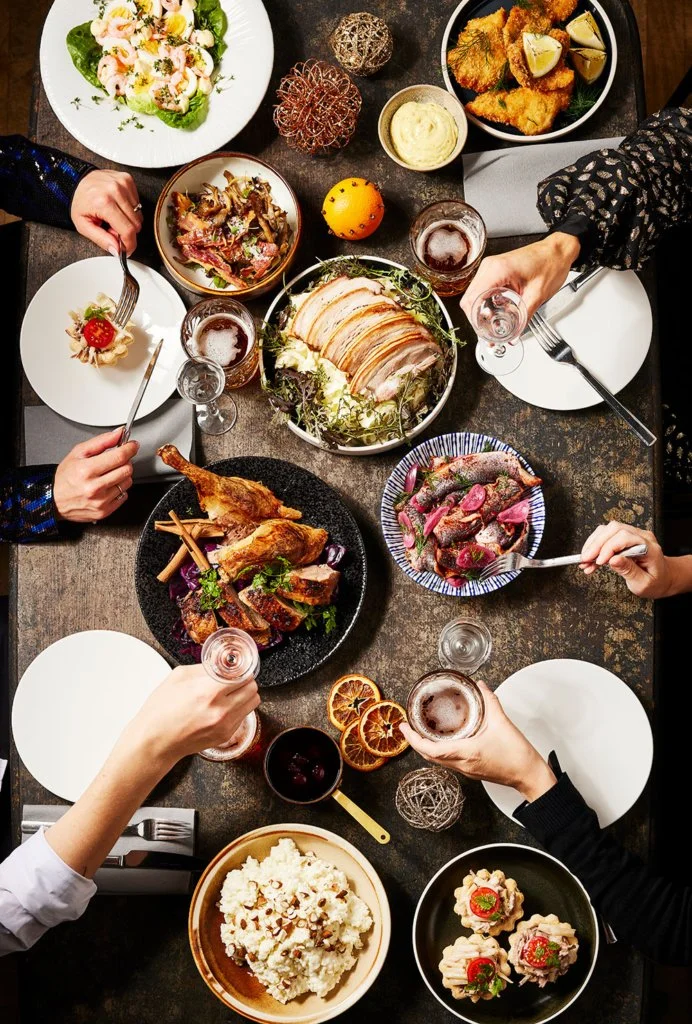
Photo Credit & Source: https://smagogslaegt.dk/vare/julefrokost-10-retter/
It literally means “Christmas lunch”, but julefrokost is really just an excuse to have a party. It can happen any time from late October all the way into February, where it may even overlap with påskefrokost, the Easter lunch. Like J-dag and P-dag, the two are basically the same thing with different branding.
Expect a long table full of pickled herring, rye bread, frikadeller, warm liver pâté and roast pork. Expect a lot of “skål!” as well, often with a small glass of snaps that Danes will insist “helps the herring go down”. Lunch is a generous word here. A julefrokost that starts at noon may well still be going at midnight. A friendly tip: don’t plan anything important for the morning after.
2. Pakkeleg
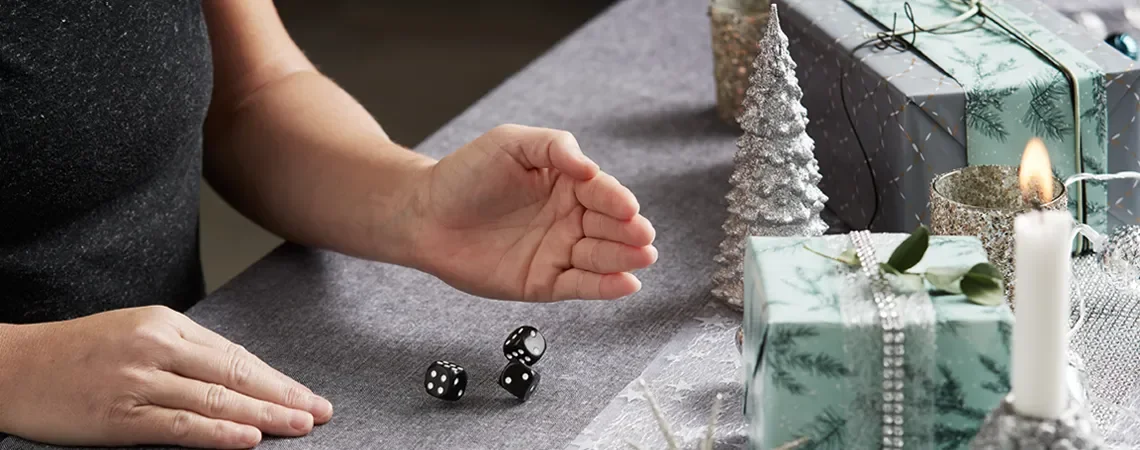
Photo Credit & Source: https://jysk.dk/inspiration/hyg-jer-med-pakkeleg
Somewhere during the julefrokost, someone will bring out the dice. Pakkeleg (“the present game”) is the Danish version of a gift swap, and it is much more competitive than it looks. Everyone brings a small, cheap present. You take turns rolling a die, and every time you roll a six, you get to take a present, either from the pile or straight out of a colleague’s hands. When the timer runs out, whatever you’re holding is yours. Friendships have been tested over a scented candle and a bottle opener shaped like a reindeer. Pro tip: a good bag of licorice is always popular. You just might want to avoid your own present in case you haven’t built up the taste for the black “sweet”.
3. The secret nisse
Many Danish offices also have a “nissevenner” (elf friends) game, which is a bit like Secret Santa. You secretly draw a colleague’s name and leave them small surprises on their desk throughout December. The nisse is the small Danish Christmas elf in a red hat and grey woollen clothes, and he is famously mischievous. That means some of your “gifts” may be pranks. If your stapler is suddenly wrapped in tinfoil, now you know who to blame. Folklore says you should put out a bowl of risengrød for your nisse in the attic on Christmas Eve. If you forget, he’ll make trouble all year. Consider yourself warned.
4. J-dag

Photo Credit & Source: https://tv.tv2.dk/2013-11-01-ekspert-derfor-fejrer-vi-j-dag
This one has already happened this year (it’s always the first Friday of November). J-dag, or J-day, is the day the Christmas beer is released. Many Danes plan a whole day out around getting the Christmas beer. Somewhere a truck drives through the city handing out free beer and blue Santa hats, and somewhere else someone is singing a song about snow that isn’t falling. Is the beer especially delicious? I couldn’t tell you, I don’t drink beer. But people go mad for it, even though it is more or less the same thing as Easter beer (aka påskeøl).
5. Julekalender (Christmas calendar)
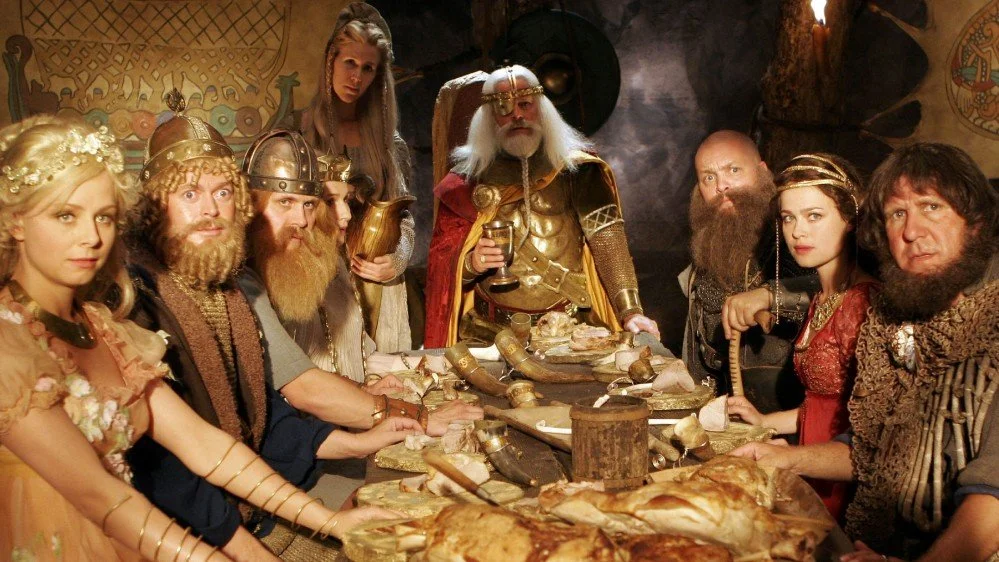
Photo Credit & Source: https://brianiskov.blogspot.com/2015/12/tv2-julekalender-jul-i-valhal-2005.html
Denmark has the usual calendar with a little present every day. We call that a Christmas calendar, because “advent” is reserved for the four Sundays before Christmas Eve, when we light one more candle in the advent wreath each week.
To a Dane, though, a julekalender usually means a TV show with 24 episodes, one for every day from 1 December to Christmas Eve. In it, a group of children (or nisser, or a rather confused Norse god) have to save Christmas before the 24th. Grown adults will happily quote julekalendere from 30 years ago. For recommendations, Jul i Valhalla (Christmas in Valhalla) and Jesus og Josefine are two of the most iconic Christmas calendars ever made, and I refuse to admit that I’m biased at all.
6. Kalenderlys
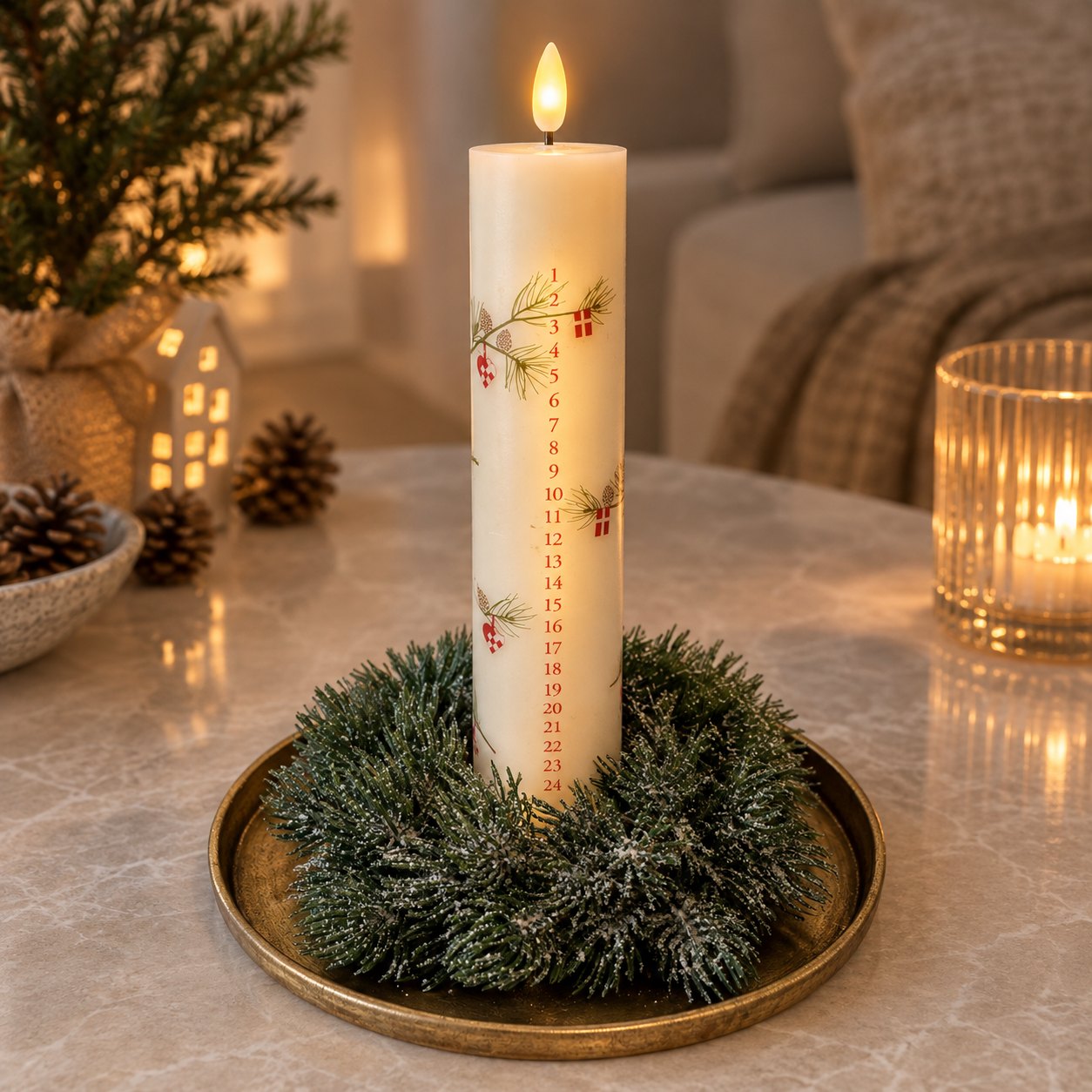
You’ve probably heard that “hygge” means being cozy with hot chocolate and lots of candles. Danes are a bit tired of this description, because it makes hygge sound seasonal. Most of us would rather say it’s simply a feeling. Still, there is no better time to practice hygge in its purest form than December.
Danes have optimised this even further with the kalenderlys, or calendar candle. It has the numbers 1 to 24 printed down the side, and you light it for a little while each day to burn down that day’s number. By the 24th, the whole candle is gone, and hopefully you’ve spent plenty of cozy evenings with your favourite people. Don’t be surprised if one shows up in the office kitchen. Do be surprised if nobody forgets to blow it out at least once and burns through three days in one afternoon.
7. Gløgg and æbleskiver
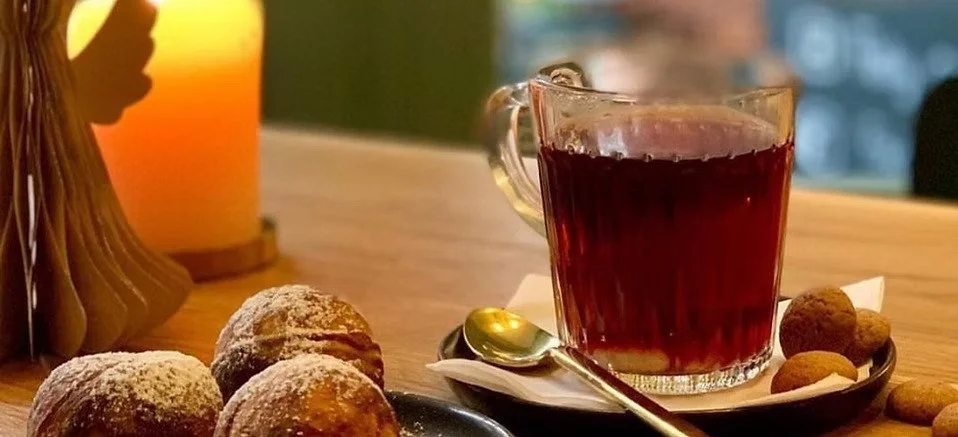
Photo Credit & Source: https://www.zaetteberg.dk/gl%C3%B8gg
If it’s a dark December afternoon and the office suddenly smells of cinnamon, cloves and warm red wine, someone has made gløgg. It’s the Danish version of mulled wine, served with raisins and chopped almonds at the bottom of the cup. Yes, you eat them with a teaspoon, and yes, that’s the best part.
Gløgg almost always comes with æbleskiver: round, fluffy pancake balls dipped in powdered sugar and jam. The name means “apple slices”, but there is no apple in them. Nobody can explain why, and nobody seems bothered. Look out for small pebernødder (crunchy spiced cookies) too. They tend to appear in bowls around the office in November and somehow never run out.
8. Risengrød and risalamande
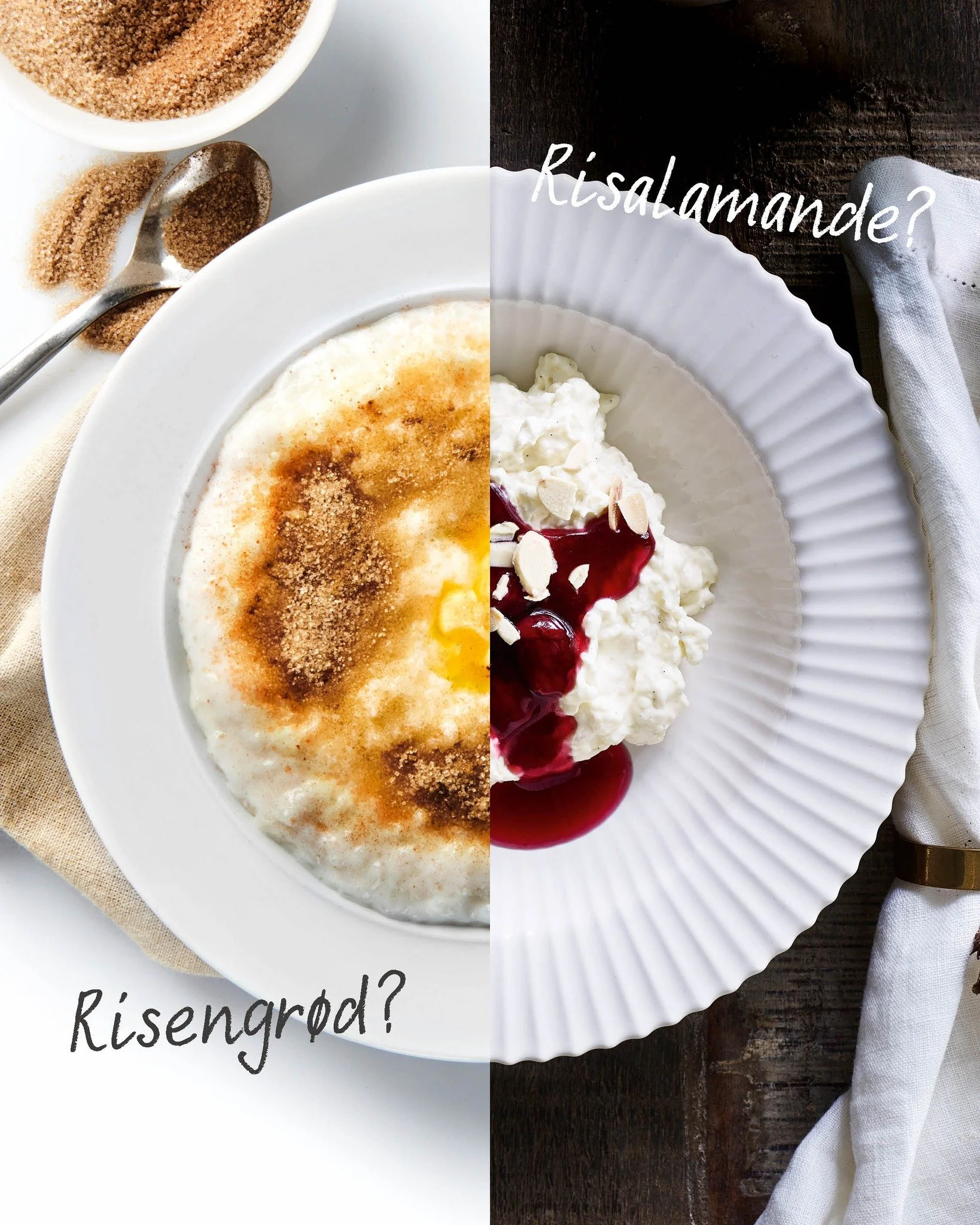
Photo Credit & Source: https://www.instagram.com/p/DSb5WEHAW-O/
Maybe you’ve had rice porridge before, but please don’t tell the Danes in your life. We like to wow people with hot rice porridge topped with cinnamon, sugar and a knob of butter melting in the middle. The next day, we turn the leftovers into a cold dessert with whipped cream, chopped almonds and warm cherry sauce.
Please also get very excited about the almond game. One whole almond is hidden in the bowl, and whoever finds it wins a prize, traditionally a marzipan pig. The real game is pretending you haven’t found it. Expect a lot of suspicious faces, people chewing very slowly, and at least one relative who has hidden the almond in their cheek for 20 minutes just to keep everyone else eating.
These dishes have a pretty silly history. Back in the day, risengrød was a fancy dish, because rice was expensive and hard to get. Once rice became more common, the wealthy were not pleased about eating the same thing as everyone else. So they looked for a way to make risengrød into something ordinary people couldn’t afford, and added whipped cream and almonds. The result was risalamande. Although it’s fully Danish, it was given a pretentious French-sounding name (from “riz à l’amande”) to set it apart from common food. Because, as we all know, anything French is fancy. That includes the “French hot dogs”, which are about as French as “Danish pastries” are Danish. (In Denmark we call those wienerbrød, Viennese bread. Everyone is borrowing from everyone.)
9. Julehjerter
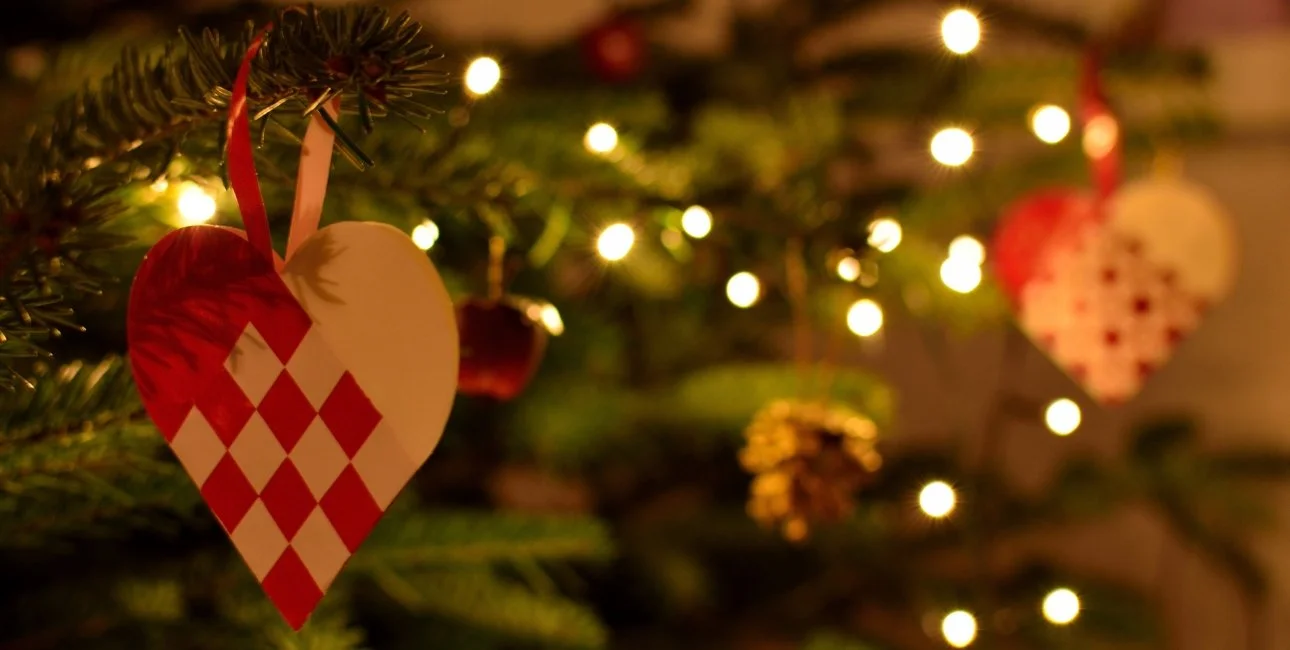
Photo Credit & Source: https://www.bibelselskabet.dk/det-flettede-julehjerte-er-en-dansk-juletradition
Sooner or later, someone will hand you scissors and glossy paper and you’ll find yourself making “flettede julehjerter”, woven Christmas hearts. They’re usually red and white, and they hang on Christmas trees, in windows and on office plants all over the country. Some say H.C. Andersen made the oldest one that still exists. Making your first one is surprisingly hard. Making your tenth is surprisingly addictive. If yours ends up looking like a lopsided basket, that’s completely normal. It counts as handmade charm.
10. Dancing around the Christmas tree
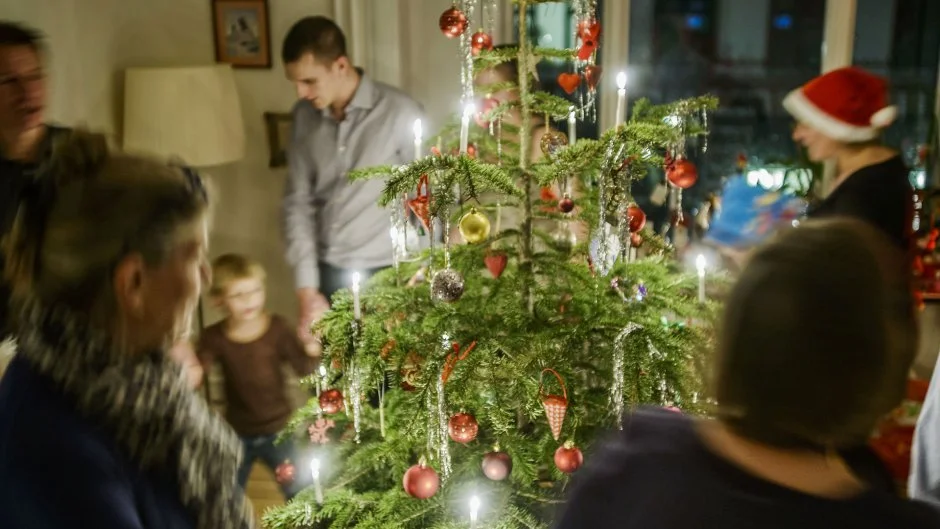
Yes, in Denmark the Christmas tree has a job beyond decorating the living room and guarding the presents. On Christmas Eve, after dinner, everyone holds hands and walks around the tree, singing carols and hymns. It starts slowly and solemnly with classics like “Et barn er født i Betlehem” and “Højt fra træets grønne top”.
Does it give winter Midsommar vibes? Maybe a little. But it’s harmless, I promise. No one will ask you to throw yourself off a cliff (we’ll leave that to the Swedes). And although some of the songs are hymns, most Danes don’t really see it as religious. It’s one of those things we do because we’ve always done it, so why change it?
Also, it doesn’t stay solemn for long. The evening usually ends with “Nu er det jul igen” (“Now it’s Christmas again”). The tempo goes up, the chain of people lets go of the tree, and the whole family runs through the house, around furniture, in and out of rooms, and sometimes up and down the stairs. It’s chaotic, it’s loud, and it’s the most Danish thing you’ll see all year.
So, glædelig jul!
Whether you end up rolling dice for a reindeer bottle opener, chewing very slowly to hide an almond, or running through someone’s living room singing at full volume, you’re now ready for a Danish December. Light a candle, grab an æbleskive, and enjoy the hygge. From all of us here in the office: glædelig jul, and welcome to Denmark!
